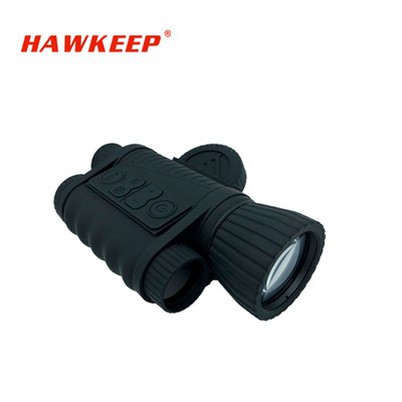

How does the environmental adaptability of a thermal imaging monocular work?
Leave a message

Hey there! As a supplier of Thermal Imaging Monoculars, I often get asked about how these nifty devices adapt to different environments. Well, let's dive right in and explore the ins and outs of the environmental adaptability of thermal imaging monoculars.


Understanding the Basics of Thermal Imaging
First off, let's quickly go over what thermal imaging is. Thermal imaging monoculars detect infrared radiation emitted by objects. Every object with a temperature above absolute zero (-273.15°C or -459.67°F) emits infrared radiation. The thermal imaging monocular captures this radiation and converts it into an image that we can see, where different colors represent different temperatures.
Adaptability to Different Lighting Conditions
One of the coolest things about thermal imaging monoculars is their ability to work in a wide range of lighting conditions. Unlike traditional optical devices that rely on visible light, thermal imaging monoculars can operate in complete darkness. Whether it's a moonless night in the forest or an underground cave, these devices can still provide clear images.
In bright daylight, thermal imaging monoculars also perform well. While the bright sunlight might be blinding for our eyes and some optical devices, thermal imaging monoculars are focused on the infrared spectrum. So, the intense visible light doesn't interfere with their ability to detect and display thermal information. This makes them great for all - day surveillance, whether you're a hunter tracking game from dawn to dusk or a security guard monitoring a large area.
Handling Extreme Temperatures
Thermal imaging monoculars are designed to handle extreme temperatures. In cold environments, like the Arctic or high - altitude mountains, the internal components of the monocular are engineered to function properly. Special insulation and temperature - regulating mechanisms ensure that the electronics don't freeze up. The lenses are also treated to prevent fogging and icing, which could otherwise obstruct the view.
On the other hand, in hot environments such as deserts or industrial areas with high - temperature machinery, the monoculars are built to dissipate heat effectively. They have heat - resistant materials and ventilation systems that prevent overheating. This allows them to maintain accurate thermal detection even when the surrounding air temperature is extremely high.
Resistance to Humidity and Moisture
Humidity and moisture can be a real problem for many electronic devices, but thermal imaging monoculars are up to the challenge. They are often sealed to prevent water and moisture from getting inside. This is crucial, especially for applications in rainy or humid areas like rainforests or near bodies of water.
Some high - end models are even waterproof, which means they can be submerged in water for a certain period without getting damaged. This makes them suitable for marine applications, such as search and rescue operations at sea or monitoring coastal areas.
Adaptability to Different Terrains
Whether you're in a dense forest, open grassland, or rocky mountains, thermal imaging monoculars can adapt. In forests, the ability to detect heat signatures through foliage can be a game - changer. Animals or people hiding behind trees or bushes can still be detected because their body heat is radiating through the leaves.
In open terrains, the long - range detection capabilities of thermal imaging monoculars come into play. You can spot heat sources from a great distance, which is useful for activities like wildlife observation or border security. On rocky terrains, the rugged construction of the monoculars allows them to withstand the bumps and jolts that come with moving over uneven ground.
Different Types of Thermal Imaging Monoculars for Various Environments
We offer a range of thermal imaging monoculars to suit different environmental needs. For example, our WIFI Thermal Imaging Monocular is great for those who need to share the thermal images in real - time. It can be connected to a smartphone or other devices via Wi - Fi, making it ideal for team - based operations in any environment.
If you're looking for a monocular with added functionality, our Thermal Imaging Rangefinder is a great choice. It not only provides thermal images but also measures the distance to the target. This is extremely useful in hunting or military applications, where knowing the distance to the target is crucial.
Our Handheld Thermal Imaging Monocular is designed for easy portability and use in various environments. It's lightweight and ergonomic, making it comfortable to hold for long periods, whether you're on a long - distance hike or a stakeout.
Conclusion and Call to Action
In conclusion, the environmental adaptability of thermal imaging monoculars is truly remarkable. They can work in a wide range of lighting, temperature, humidity, and terrain conditions, making them versatile tools for many different applications. Whether you're a professional in the security, hunting, or wildlife research field, or just an outdoor enthusiast, a thermal imaging monocular can be a valuable addition to your gear.
If you're interested in learning more about our thermal imaging monoculars or want to discuss a potential purchase, feel free to reach out. We're here to help you find the perfect device for your specific environmental needs.
References
- Wilson, J. (2018). Thermal Imaging Technology: Principles and Applications. Springer.
- Smith, A. (2020). Advances in Infrared Imaging for Environmental Monitoring. Journal of Environmental Science and Technology.