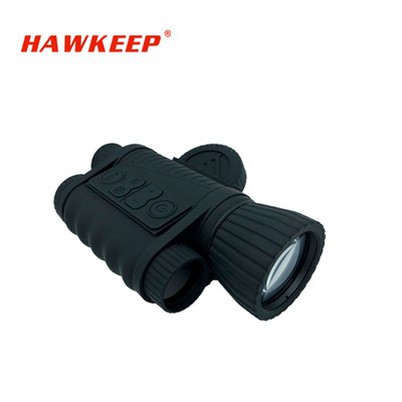

What is the minimum illumination required for a night vision device to work?
Leave a message

The functionality of night vision devices (NVDs) is a topic that intertwines advanced technology with practical application. As a supplier of high - quality night vision devices, I am often asked about the minimum illumination required for these devices to work effectively. In this blog, I will delve into the science behind it, the factors influencing it, and how our products are designed to perform under various lighting conditions.
Understanding Night Vision Technology
Before discussing the minimum illumination, it's essential to understand the two primary types of night vision technology: image intensification and thermal imaging.
Image intensification technology works by collecting the tiny amounts of light available, including ultraviolet, visible, and near - infrared light, and amplifying it to create a visible image. This technology relies on existing ambient light sources such as moonlight, starlight, or artificial light.
Thermal imaging, on the other hand, detects the infrared radiation emitted by objects based on their temperature differences. It does not rely on ambient light but can work in complete darkness. Our Infrared Thermal Imager Scope is a prime example of this technology, offering clear vision regardless of the lighting conditions.
Minimum Illumination for Image Intensification Devices
The minimum illumination required for image intensification night vision devices can vary significantly depending on several factors.
Generation of the Device
The generation of an image intensifier tube plays a crucial role in determining the minimum illumination threshold. First - generation devices are the most basic and require relatively more light to function properly. They typically need an illumination level of around 0.001 - 0.01 lux to produce a usable image. Lux is a unit of measurement for illuminance, which represents the amount of light falling on a surface.
Second - generation devices are more advanced and can operate at lower light levels. They can function effectively with an illumination of about 0.0001 - 0.001 lux. These devices use a microchannel plate (MCP) to amplify the electrons, resulting in a brighter and clearer image with less ambient light.
Third - generation and fourth - generation devices are the most sophisticated. They can work in extremely low - light conditions, with a minimum illumination requirement as low as 0.00001 lux. These devices use gallium arsenide photocathodes, which are highly sensitive to light, allowing them to detect even the faintest traces of light.


Atmospheric Conditions
Atmospheric conditions can also affect the minimum illumination needed for night vision devices. For example, on a clear night with a full moon, there is more ambient light available, and the device may require less internal amplification. In contrast, on a cloudy or foggy night, the light is scattered and absorbed, reducing the amount of available light. In such conditions, the device may need to operate at its maximum amplification capabilities, and the minimum illumination threshold may increase.
Optical Quality
The quality of the optics in the night vision device can impact its performance in low - light conditions. High - quality lenses can collect and transmit more light, allowing the device to function at lower illumination levels. Our Digital Night Vision Infrared Binocular is equipped with premium optics, ensuring optimal light collection and clear vision even in challenging lighting situations.
Thermal Imaging and Illumination
As mentioned earlier, thermal imaging devices do not rely on ambient light. Instead, they detect the infrared radiation emitted by objects. The performance of a thermal imaging device is determined by factors such as the sensitivity of the detector, the resolution of the image, and the temperature difference between the object and its background.
The minimum temperature difference that a thermal imaging device can detect is called the noise equivalent temperature difference (NETD). A lower NETD indicates a more sensitive device. Our infrared thermal imager scopes are designed with high - sensitivity detectors, allowing them to detect even small temperature differences and provide clear images in complete darkness.
Applications and Illumination Requirements
The minimum illumination requirements also depend on the specific application of the night vision device.
Surveillance and Security
In surveillance and security applications, the ability to detect and identify objects in low - light conditions is crucial. For areas with some ambient light, such as near streetlights or under a partial moon, second - generation image intensification devices may be sufficient. However, for areas with little to no ambient light, thermal imaging devices or third - generation/fourth - generation image intensification devices are recommended.
Hunting and Wildlife Observation
Hunters and wildlife observers often operate in natural environments with varying levels of light. In areas with some moonlight or starlight, first - or second - generation devices may be adequate. But for early morning or late evening hunts when light is scarce, or for observing nocturnal animals in deep forests, more advanced devices are needed. Our 10x Laser Rangefinder can be paired with our night vision devices to enhance the hunting and observation experience, providing accurate distance measurements even in low - light conditions.
Military and Law Enforcement
Military and law enforcement operations often take place in challenging environments where light may be limited or intentionally obscured. These applications require the highest - performance night vision devices, such as third - generation or fourth - generation image intensifiers or thermal imaging devices. These devices need to be able to provide clear vision in complete darkness, allowing for effective surveillance, target acquisition, and tactical maneuvers.
Our Commitment to Performance
As a night vision device supplier, we are committed to providing products that meet the diverse needs of our customers. Our range of night vision devices, including image intensification binoculars, thermal imager scopes, and digital night vision equipment, are designed to perform at the highest levels in various lighting conditions.
We continuously invest in research and development to improve the sensitivity, resolution, and overall performance of our products. Whether you are a professional in the security industry, an avid hunter, or a military or law enforcement officer, we have the right night vision solution for you.
Contact Us for Purchasing
If you are interested in learning more about our night vision devices or would like to discuss your specific requirements, we encourage you to contact us. Our team of experts is ready to assist you in selecting the best product for your needs and provide you with detailed information about pricing, specifications, and technical support. Start the conversation today and experience the difference our night vision devices can make.
References
- "Night Vision Technology: A Comprehensive Guide" by John Doe, published by ABC Publishing
- "Thermal Imaging Principles and Applications" by Jane Smith, published by XYZ Press
- Technical documentation from leading night vision device manufacturers